

The African Union (AU) High-Level Panel on Emerging Technologies (APET) and the Calestous Juma Executive Dialogues, (CJED), during a Secretariat meeting, highlighted various innovations with which Africans are addressing waste pollution on the continent in 2021.
Reasons for increased pollution
Africa’s rapid population growth, augmented by socio-economic activities and expanding urbanisation has led to increased production and utilisation of plastic products. Plastic pollution is termed as the accumulation of plastic waste in the environment and had become one of the biggest environmental concerns across Africa. The increased production of disposable plastic products has overwhelmed the continent’s ability to dispose of it properly. To make matters worse, efficient disposal infrastructure and management systems are severely lacking.
The current situation
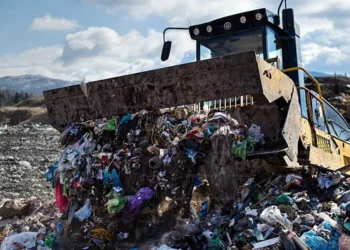
It has been reported that in sub-Saharan Africa alone, approximately 17 million tonnes of plastic waste are produced annually, often disposed of in open dumpsites. Consequently, plastic waste finds its way into rivers, lakes and the ocean. This gigantic amount of waste is threatening the continent’s environmental, land and sea animal life as well as human livelihood. It also negatively impacts the attainment of the AU Agenda 2063 Goal Number 7 which strives for environmentally sustainable and climate-resilient economies within African communities.

Plastic pollution is not only an environmental challenge for Africa, but also a major socio-economic development challenge. It is impacting biodiversity in tourism and agriculture and infrastructural development, growth and fisheries.
Scientific explanation
Plastic’s composition contains fossil hydrocarbons derived from organic monomers such as polyethylene, polypropylene, polystyrene, polyvinyl chloride and bisphenol A. These are all non-biodegradable and difficult to decompose by way of regular biochemical processes after disposal.
Non-biodegradable article’s negative environmental footprint last a long time due to plastics release fillers, plasticisers and toxic monomers. Some of these compounds are released into the environment, such as bisphenol A, which has cancerous properties, contaminating water bodies used by humans and animals which are often part of a diet. This tenacity allows plastic waste to not only accumulate in large numbers and volumes, but also acts as toxins and micro-plastics in the environment. Only 9% of the plastics produced worldwide are recycled and a mere 27% burned using incinerators.
Some African countries have embarked on programmes to reduce plastic pollution by adopting and implementing sustainable plastic waste management systems and recycling it into environmentally-friendly products. New plastic waste management technologies, although too few, are in small, but highly successful ways starting to protect the environment.
Nairobi, Kenya’s capital generates an estimated 2,400 tonnes of solid waste daily, constituting around 20% of plastic waste. This has forced the country to increasingly adopt alternative uses.
The Gjenge Makers Limited, a social enterprise, recycles plastics to develop alternative and affordable building materials such as pavers for exterior flooring. New generation concrete and bricks are derived from recycled plastic waste by sourcing raw material from post-industrial plastic waste and post-consumer plastic waste recycling. The company is expanding its product range to include construction posts, plastics, timber and building blocks, all developed from recycled plastic waste. Recycled plastic is transformed into building bricks with twice the weight threshold of concrete blocks.
Ghana produces approximately 1.1 million tonnes of plastic waste each year of which only 5% is collected and recycled. Most of this is collected and cleaned by informal waste pickers within local communities to supply limited formalised institutions and companies working to improve the country’s management mechanisms for waste materials.
To improve plastic waste management data collection, a pilot project between the World Economic Forum (WEF), the Global Plastic Action Partnership and a Sampling and Analysis Plan (SAP), established a group of 2,000 waste pickers tasked with measuring the quantities and types of plastics they collect. The collected data is then analysed alongside prices paid throughout the value chain by buyers in Ghana and internationally. This data assisted Ghana’s policymaking towards formulating recycling programmes such as building recycling plants. Furthermore, programmes such as creating centralised plastic waste collection places were established to benefit informal waste pickers with fair pricing mechanisms for their collected waste material.
South Africa, is also implementing policy and programme efforts under Minister Barbara Creecy, towards managing its plastic waste situation to act against further pollution the environment and climate change. The country is adopting and implementing waste-to-energy technologies to this challenge.
Waste-to-energy technologies convert the energy content of different types of waste into various forms of valuable energy. The building of plastic energy plants had already commenced across Africa.
The Lesedi Nuclear Services is currently trying to produce 50 megawatts of electricity by utilising pyrolysis technology. This process entails heating plastic waste to approximately 400°C to produce synthesis gas. The synthetic gas is then utilised to power gas engines to generate electricity, which is a major concern in the country.
APET is encouraging African governments to utilise digital and environmentally-friendly technologies towards effective waste material management systems across the continent. The use of digital technologies will enable the African continent to collect sufficient plastic waste data to improve plastic waste management systems.
APET also believes that by improving plastic waste management systems that it could support African entrepreneurs pursuing sustainable waste management. The organisation is advising African countries on how to pursue reusable plastic materials and avoid single-use plastics where possible and to enable
There exists sufficient scientific data to show how plastic waste had become detrimental to both flora and fauna. APET is encouraging investments through public-private partnerships among various stakeholders. Such efforts can include social entrepreneurship driving cleaning up of plastic waste. APET believes that Africa can achieve a clean and safe continent by using sustainable technologies as per the aspirations of AU’s Agenda 2063 and the United Nation’s Sustainable Development Goals.
A clean waste-plastic-free world is possible. Modern technologies can ensure an environmentally sustainable and climate change resilient Africa for generations to come.