

The Oceanic Society has launched a unique Traveller Plastic Pollution Offset Programme in partnership with the Watamu Marine Association in Kenya. Through this programme, the first of its kind in the travel industry, the Oceanic Society will support the removal of an average of more than 90 kilograms of marine litter from the environment for every passenger who joins one of their international nature expeditions.
The plastic removal “offsets” will not only apply to travellers who join future Oceanic Society expeditions, but the programme will be retroactive to July 1, 2021 when 251 travellers joined the expeditions. This amounts to sponsorships for the removal of more than 25 of marine litter from Watamu’s coastline to-date.
How the Programme works
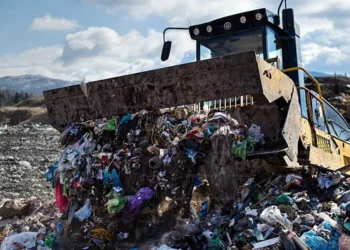
For every passenger joining an Oceanic Society expedition, the organisation will fund four days of beach clean-up efforts, meaning the removal of an average of 90 kilograms of marine litter. It is expected that these efforts will contribute to the removal of at least 40 tons of marine litter each year. Beach clean-ups will take place in Watamu, Kenya, led by the non-profit Watamu Marine Association.
The beaches and coast of Watamu are home to nesting sea turtles, coral reefs, migrating humpback whales and many more unique types of marine life and clean-ups will also include beaches within a Marine National Park and UNESCO Biosphere Reserve. All collected debris will be sorted for upcycling, recycling, or proper disposal by the organisation’s expert local partners who have a long history of success in this community-driven project.
Beach cleaners walk the beaches of Watamu, Kenya in areas where marine litter is known to accumulate and collect any marine litter they encounter, including plastics, discarded fishing gears, glass and other solid waste. The litter is taken for processing by EcoWorld Recycling in Watamu an innovative, community-run social enterprise specialising in sorting, recycling, upcycling, and properly disposing of marine litter. The money earned from repurposing waste in this trash-to-cash model supports EcoWorld employees and is invested back into the effort.
Each beach collects an average of more than 22kgs of marine litter per work day, translating into the Oceanic Society funding the removal of an average of just over 90kgs of marine litter for each traveller on each trip. This means that for the 400–450 travellers per trip, that at least 40 tonnes of marine litter would be removed annually.

The Clean-up Site and Community
The clean-up efforts will be led by the Watamu Marine Association, a non-profit organisation employing local women and youth to collect, clean, sort, and recycle/upcycle/dispose of marine litter. The clean-ups will take place along the beaches of Watamu, a hotspot for marine biodiversity including important habitats for birds, sea turtles, whales, dolphins and coral reefs among others. Beaches cleaned will include those within the boundaries of the Watamu Marine National Park & Reserve, Kenya’s first Marine Protected Area and one of the oldest in Africa.
Why Watamu?
Beyond its ecological importance, Watamu is a popular nature tourism destination attracting thousands of international and national visitors every year. The tourism industry of Kenya is the largest local employer and keeping Watamu’s coastline clean helps maintain the area’s tourist appeal.
Thanks to Oceanic Society’s Traveller Plastic Pollution Offset Program, Watamu Marine Association will be able to employ multiple full-time beach cleaners year-round. This will free up money previously paid out as salaries to be reinvested in other community-driven sustainability initiatives such as training local snorkel and dolphin tour guides.
The Oceanic Society has been leading safaris in Kenya since the 1970’s and had been working closely with the Watamu Marine Association since 2002. Kenya safaris are designed in such a way that travellers can learn from community leaders about their unique and innovative projects. The Oceanic Society’s collaboration with the Watamu Marine Association has been one reason these Kenya safaris were named one of National Geographic Traveller’s “50 Tours of a Lifetime” in 2014. Since then, it had continued to build on its relationship with the Watamu Marine Association and in 2019 they were the first recipient of funds from the organisation’s Expedition Impact Fund.
Plastic pollution is one of the greatest threats to ocean health worldwide. To address this urgent problem, the Oceanic Society encourages people around the globe to pursue solutions to plastic pollution in their daily lives and throughout their spheres of influence – Brian Hutchinson
The Traveller Plastic Pollution Offset Programme was created to give travellers a way to fight plastic pollution by supporting the direct removal of marine litter in an ecologically important area. This unique and novel way of saving the ocean, provide travellers with an opportunity to make an impact to an important ocean area and a community in need. Moreover, this inspiring project supports human livelihoods with practical solutions aiming to solve the globally overwhelming issue of marine litter. In the coming years, the Oceanic Society hopes to expand this programme beyond Kenya to cover other marine areas their travellers visit.
History of Oceanic Society Expeditions
Established in 1969, the Oceanic Society is America’s oldest 501(c)(3) non-profit organisation dedicated to ocean conservation. Their expeditions have been a core component of how their mission had been followed for 50 years. Each trip is designed with the intention to positively impact natural areas and communities visited, while also delivering a transformative nature experience for our travellers which deepens their connection to nature and promotes the adoption of ocean-friendly “Blue Habits.” Moreover, any profits earned are invested directly into ocean research and conservation programmes worldwide.
Brian Hutchinson
Brian Hutchinson is the Oceanic Society’s Vice President of Outreach, co-founder of the State of the World’s Sea Turtles Programme and programme officer of the IUCN-SSC Marine Turtle Specialist Group. Brian holds a B.A. in zoology from Connecticut College and has been working to advance global marine conservation for more than fifteen years. He is an avid traveller who has visited more than 40 countries and led Oceanic Society expeditions in Costa Rica, Cuba, Baja California and Trinidad.