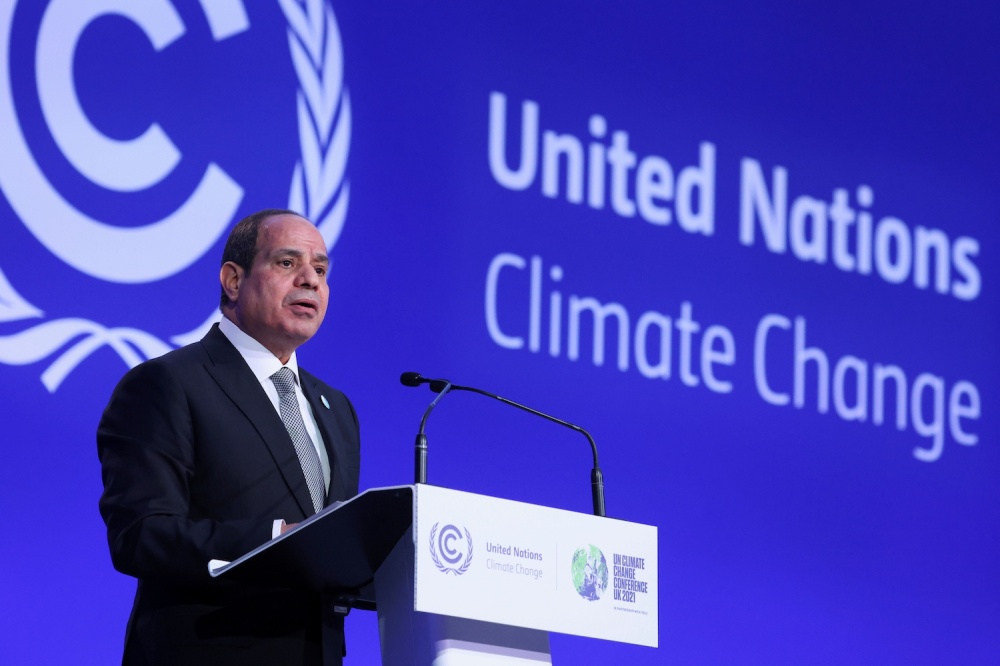
A historic deal struck during the United Nations (UN) COP27 Summit in Egypt in 2022, recognized and called for urgent efforts to enable closer climate and biodiversity ties, labeling it “critical.” At the same Summit on African soil, the UN adopted a resolution to provide funding for vulnerable countries, such as those across Africa, which are hit hard by climate disasters.
The ambitious COP15 concluded with the Kunming–Montreal Global Biodiversity Framework, aiming to halt and reverse global nature loss by the year 2030. A proposition was accepted, despite alternative arguments, to increase finance to developing countries.
For almost five decades, multilateral agreements promoted measures with diverging approaches, impinging across each other’s boundaries. However, with agreements embracing biodiversity, synergies, policies and approaches can advance both priorities in a mutually beneficial manner.
Trade-offs, Synergies & Forest Blindness
Previously trade-offs and synergies between climate and biodiversity issues narrowly focused on mitigation, and to quote the adage; “cannot see the forest for the trees,” it seemed to unfortunately be the case with national governments. This unfortunately led to forests, providing vital benefits to people and communities, being given a silo approach by various governments.
Fortunately, the international community has now started to promote synergies, calling for integrated efforts that are beneficial to the environment while also, carbon negative.
As various land and ocean ecosystems are also major carbon sinks, governments have come to realise that their conservation is key to achieving net-zero emissions. Sadly, the acidifying of the ocean and increasing destruction of forests, due to economic exploitation, has depleted biodiversity to the extent that the planet is already undergoing its sixth mass extinction event.
Current trends of biodiversity loss and overburdened natural ecosystems further challenge climate adaptation with serious impacts on people’s health, and these are starting to be more widely recognized. This has led to the new concept of “One Health,” which aims to promote the health of people, animals and the environment in an integrated way. Humans experience improved well-being during a walk in the woods or a park. Attention was drawn to this phenomenon by Rachel Carson in her 1962 book “Silent Spring,” (on which GreeningAfrika reported last month) which expressed the fear that this luxury may one day disappear. The day of reckoning may be nearer than she imagined.
Thankfully, the global scientific and political community is beginning to look at the world through the lens of synergy. This encourages thinking in terms of a “nexus” which includes climate, biodiversity, food, water and health. The COP27 agreement underlined the urgent need to address the interlinked global crises of climate change and biodiversity loss in the broader context of achieving the Sustainable Development Goals (SDGs), as well as the vital importance of protecting, conserving, restoring and sustainably using nature and ecosystems. Parties were encouraged to implement nature-based solutions for mitigation and adaptation while ensuring relevant social and environmental safeguards.
COP27 & COP15
Scientific evidence can guide the international policy process toward this synergistic approach. Last year, both COP27 and COP15 discussed important issues concerning the interlinking of climate, nature and people; the integration of biodiversity and climate goals at the national and international level; and more effective and efficient use of finance.
As a result of the constant push for integrated action, one of the 23 targets adopted at COP15 to be achieved by 2030 is minimising the impact of climate change on biodiversity and increasing its resilience through mitigation, adaptation and disaster risk reduction. This can be achieved through nature-based solutions and ecosystem-based approaches. Another target focuses on optimising co-benefits and synergies of finance targeting the biodiversity and climate crises.
The 30×30 target
While these two targets directly cater to synergies, the overall “30×30” target; protecting 30% of Earth’s land and ocean by 2030, will also be critical to achieving climate goals and the SDG’s in the long run. It is important to understand that even though biodiversity is a national resource, its loss is a global challenge. Just as climate change, biodiversity loss can affect our daily lives, food security and health.
Both issues need to receive equal global attention, which will go aid integrated national policies. Across national governments, city governments and private sector, there is currently more focus on climate action than biodiversity issues, calling for deepening of understanding of synergies between the two interlinked priorities. The meeting of Group of Seven environment ministers in Sapporo, Japan last month saw new commitments toward major challenges, constituting a unique opportunity for stakeholders to advance this momentum on climate–biodiversity synergies.