Behind the various headlines of the past year, there are certain that stand out. We look at those which led to fights, what climate experts feel about Trump, the COP29’s perceived lack of success and how the earth is reaching new temperature records.
Earth.Org highlighted the following:
- Ocean warming intensified wind speed for all Atlantic hurricanes in 2024.
- COP29 $300 billion climate finance pledge an ‘insult’ say developing nations, campaigners.
- 2024 ‘virtually certain’ to be hottest on record, marking ‘new milestone’ in temperature records.
- Global carbon budget: only 6 years left before global warming exceeds 1.5C, new report warns. ‘Deeply troubling’:
- Climate experts and Environmentalists weigh in on Trump election victory and his cabinet picks as he withdraws from Paris Climate Agreement for second time.
- COP16 delegates disappointed at lack of finance deal despite breakthroughs on genetic data and Indigenous representation.
- Floods and droughts driving increasing displacement in Africa.
- Gas stoves linked to 40,000 premature deaths in EU and UK annually:
- Five chemical and oil firms behind alliance to end plastic have produced 1,000 times more plastic than they cleaned up, analysis finds.
“When I say we are the most intellectual creatures on this planet, I deliberately don’t say we are the most intelligent. Because what intelligent species would systematically destroy its only home?” – Dr Jane Goodall, British primatologist and conservationist.
On November 26, renowned British primatologist and conservationist Dr. Jane Goodall (90) delivered a powerful talk on integrating biodiversity into corporate responsibility at the Hong Kong University.
”Elon Musk may believe that he’s going to find a planet in his lifetime where humans can live, but I don’t believe that’s true. We just got this one beautiful planet that we call home. We got to work together to save it,” she continued.
Africa and its Unique Challenges
While these news items show the effect of humanity’s destruction of the planet and its global effects, Africa’s problems are unique and affecting millions on the continent. One of these is desertification, displacing people and leading to extreme climate events and food scarcity. While Africa is not top of most Third World countries’ agenda to save, the humanitarian disaster is of shocking proportions.
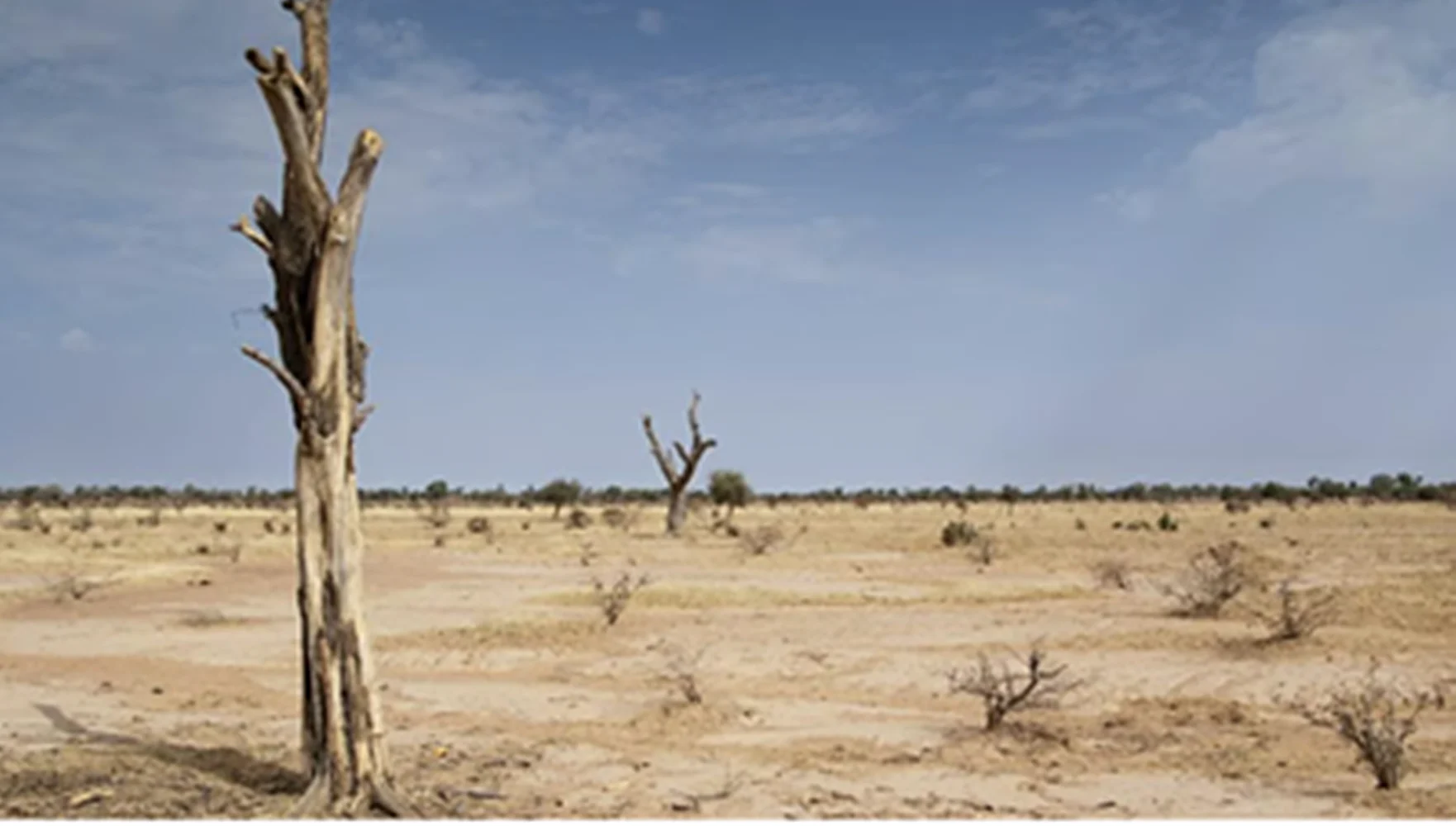
Desertification has a few varying definitions, but mostly centres around semi-arid, sub-humid lands; in simple terms, it can be described as areas with low or variable rainfall. In addition, there is also the added element of human-induced land degradation owing to an expanding population and rampant deforestation.
Desertification is a huge issue also in Africa. For example, poor harvesting and a surge in barren lands continue to plague the inhabitants of Engaruka, Tanzania. In Mauritania, a drop in rainfall has worsened agricultural production and has left many farmers struggling to grow enough food to eat or sell.
According to estimates, 319 million hectares of Africa are vulnerable to desertification due to sand movement. The assessment done by FAO and UNEP suggests that the desert is moving at an annual rate of 5 km in the semi-arid areas of West Africa.
Desertification can also cause loss of biodiversity and loss of aquifers. In Africa, with nearly 45% of the landmass experiencing desertification, many people face even greater risks. In Mauritania, the dire situation has caused food insecurity, housing problems and population health declines. Villagers are trying to migrate as their houses become buried under the sand in addition to a lack of water sources and income.
Desertification has also led to an increase in the frequency of dust storms. Particulate matter, pathogens and allergens are detrimental to human health. The health effects caused by dust storms are greatest in the areas in the immediate vicinity of their origin and regions like the Sahara Desert. Globally, dust storms have been attributed to causing approximately 15–50% of all cardiopulmonary deaths.
The impacts of desertification in conjunction with climate change on socio-economic systems were also exemplified in an IPCC Report on climate change and land degradation. The report suggests that the interplay between desertification and climate change greatly affects the achievement of the targets of SDG’s 13 (climate action) and 15 (life on land), thereby highlighting the need for efficient policy actions on land degradation neutrality and climate change mitigation.
How Do We Solve This Problem in Africa?
A new global approach of proactive action and risk management efforts is warranted in today’s changing landscape and climate. Droughts seem to be concurrent with desertification in many parts of the Earth.
In Niger, local bodies have rehabilitated land to restore soil fertility, which has positively affected the country whose economy is largely dependent on agriculture. Here, the smallholder farmers have taken the initiative into their own hands by developing the principle of farmer-managed natural regeneration (FMNR). This technique involves the regeneration and multiplication of valuable trees which roots already lay underneath their land, encouraging significant tree growth. Felled tree stumps, sprouting root systems and seeds are regrown, boosting soil productivity, increase agricultural income and the lands are greener than before.
Village communities in Kenya and Tanzanian are fighting droughts and desertification by digging semi-circular trenches which store water when it rains, thereby retaining moisture for plants and trees.
An anti-desertification tree planting ambition, “Great Green Wall” of Africa has also been moving steadily since its inception in 2007. The plan to restore the degraded lands of the Sahel Region has had its fair share of progress and setbacks, but last year’s major boost announced at the One Planet Summit has planned to accelerate its completion in order to support the local farmers and support the agriculture business.
A call to action and risk management efforts should be at the forefront of every planned proposal to curb environmental degradation. Be it land, soil, or water, efficient cooperation and community efforts will certainly go a long way in mitigating the consequences of climate change and environmental degradation.