According to the International Energy Agency, the growth in cost-effective clean energy has put the world on track to see demand for oil, gas and coal all peak before 2030. Is there hope for a fossil fuel-free future?
Investment in renewables, especially solar, in China has made a huge contribution to massive growth in clean energy. This is however, not sufficient to keep the world below 1.5C of warming, the stretch target of the Paris Agreement. In 2024, the United Nations Environment Programme found that
compared to 2019 levels, emissions need to be cut by 42% by 2030 and 57% by 2035 to meet this goal.
A handful of countries have set a date for ending extraction. Denmark, which is the European Union’s greatest extractor in the North Sea, plans to stop drilling by 2050. It banned new oil and gas exploration in 2020. Several other countries, such as Portugal, have banned oil and gas exploitation entirely. but they already import their fossil fuels anyway, so there isn’t a significant industry to shut down. Others, including New Zealand, do have an oil and gas industry but have a ban on new oil exploration, though the incumbent government plans to lift restrictions.
Colombia is the largest coal producer and exporter in South America. The country’s President, Gustavo Petro, pledged to move away from fossil fuels when he took office in 2022. So far, only a tiny fraction of the country’s energy comes from wind and solar.
In the US, former president Joe Biden used his last days in office to ban new offshore drilling along much of the US’s coastline. However, newly inaugurated President Donald Trump has declared a national energy emergency and aims to increase drilling in the US. He has also cut contributions for green energy projects to Third World Countries.
Tipping points
As many nations still speak out of two mouths on their climate commitments, could other considerations guide countries towards abandoning fossil fuels?
The major hope lies in the cost-effectiveness of renewables such as solar and wind. Even without more supportive policies, solar could well become the world’s dominant source of energy by 2050 – with some studies calculating we are already past an “irreversible solar tipping point”.
There are still more avenues which could accelerate a transition to clean power. Some countries and international organisations would like to see fossil fuels given the same treatment as nuclear weapons, with a non-proliferation treaty.
Africa – A Beacon of Hope
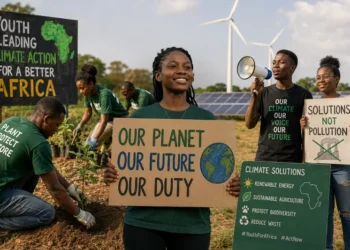
Africa has emerged as a beacon of economic opportunity, defying global trends with its steady growth trajectory. The continent’s economic trajectory is a powerful call to leverage a key catalyst for further growth and importantly, renewable energy. As the continent dominates the list of the world’s fastest-growing economies, it is increasingly evident that the adoption of renewable energy solutions such as Distributed Renewable Energy (DRE), along with Battery Energy Storage Systems (BESS) is not just a pathway to development, but a fundamental driver of economic progress and environmental stewardship.
Africa is already on the right path. By leveraging solar, wind, hydropower and other renewable sources, African nations are diversifying their energy mix, reducing dependence on fossil fuels and enhancing energy security. This shift towards renewable energy is creating new opportunities for investment, innovation and job creation, driving economic growth across sectors.
BESS plays a critical role in enhancing the reliability and resilience of renewable energy infrastructure. By storing excess energy generated from solar and wind, energy storage systems mitigate the challenges of intermittency, ensuring a steady and uninterrupted power supply.
Several African countries have expressed their interest in joining the innovative GEAPP Leadership Council-led BESS Consortium, launched at COP28, to contribute towards the goal of unlocking 90 GW of storage capacity and enabling 400 GW of renewable energy by 2030.
DRE solutions, such as solar home systems and mini-grids, are also empowering communities across Africa to generate their own clean energy. By decentralising energy production and distribution, DRE solutions expand access to electricity in remote and underserved areas, driving economic development and improving quality of life. From powering small businesses to enhancing healthcare and education services, DRE is unlocking new opportunities for inclusive growth and sustainable development.
In Ethiopia, the DREAM (Distributed Renewable Energy Modalities) project aims to establish 200 mini grids, provide electricity to over 290,000 people in remote areas, create or improve 60,000 jobs and displace up to 200,000 tonnes of greenhouse gas emissions by 2030. When completed, it will be the largest mini grid powered irrigation system on the continent.
While Africa’s economic landscape is witnessing a remarkable transformation, sustainable development and economic prosperity must go hand in hand. Renewable energy is not just an alternative; it is a strategic imperative for Africa’s economic future. As Africa accelerates its transition towards renewable energy, GEAPP stands at the forefront of this movement. By accelerating the uptake of distributed renewable energy and stimulating the uptake of BESS in emerging markets, GEAPP is driving tangible progress towards a more resilient, inclusive and sustainable future for Africa and beyond.